
This week’s issue of The Model-Based Manufacturer is coming to you a day early, and we don’t have a CAD file of the week this time. Why? Because we want to show you live:
Join us tomorrow, January 20th, at 2:30pm ET to see Dirac’s Top 10 Features of 2025! Register today for a chance to win free Oshkosh Air Show tickets + airfare.
2025 was a huge year for Dirac. After tons of new feature releases and improvements, we’ve narrowed it down to the 10 features that changed how modern factories operate.
Register here.
Industry Signals
AI acceleration is colliding with data reality.
Across manufacturing organizations (and reinforced by federal policy and funding priorities) there is a clear push to deploy AI at scale in 2026. What’s different this time is where that push is landing. Many manufacturers are realizing that AI initiatives are arriving immediately after (or on top of) their transition toward model-based definition (MBD). The implication is unavoidable: AI cannot succeed without a clear single source of truth. If models, routings, instructions, and planning data are fragmented, AI will amplify inconsistency rather than eliminate it.
1️⃣ 5 Manufacturing Trends Shaping 2026
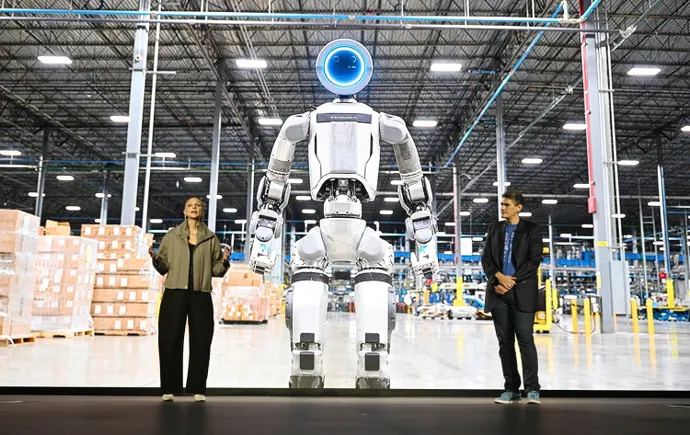
There is a large push in both internal manufacturing organizations and from the government to implement AI. This comes on the heels of the push for model-based definition. It will be vital for manufacturers to consider the single source of truth in their operations when rolling out AI.
2️⃣ Context-Aware Production Planning: Closing the Gap Between Engineering Change and Production Reality
The article explores how:
Engineering change often breaks downstream planning
Static systems fail to account for real-world production context
Model-driven workflows enable planning systems to adapt automatically
The core insight is powerful:
Planning must be aware of context. Not just schedules, but product state, change history, and production constraints.
For manufacturers serious about AI-driven planning, this is foundational reading.
3️⃣ In the Field: Joby’s eVTOL Scale-Up Strategy
A real-world example of this model-first approach is playing out in advanced aerospace manufacturing.
Joby Aviation recently acquired another facility in Vandalia, continuing its push toward large-scale production of electric vertical takeoff and landing (eVTOL) aircraft.
What’s notable is not just the expansion, but the structure:
Multiple facilities
High regulatory requirements
Extreme product complexity
In this environment, separate factories cannot operate independently. They must all point back to a shared product and production model to ensure consistency, traceability, and compliance.
This is the future of scaling advanced manufacturing: Distributed production, centralized truth.
Thanks for reading this issue of The Model-Based Manufacturer.
See you in two weeks.
— The Dirac Team