
This past Saturday, America turned 250 years old, and American manufacturing is almost exactly as old. In 1777, George Washington chose Springfield, Massachusetts as the place where the Continental Army would store and build its weapons, after learning that a country cannot fight for independence while depending on someone else for guns and gunpowder. Springfield Armory went on to help define modern manufacturing, from interchangeable parts to the production methods the rest of the world came to study.
Two and a half centuries later, that lesson is back in focus. Companies are reshoring at record rates, humanoid robots are working shifts at a car plant in South Carolina, and building in America is starting to make business sense again, not just patriotic sense. This issue looks at where American manufacturing stands at 250.
Hope you had a good Fourth. Let’s get into it.
Assembly of the Week
M107 Rifle

This week’s assembly instructions powered by BuildOS is the Barrett M107, a .50 caliber rifle built in Murfreesboro, Tennessee. It is a fitting pick for America’s 250th because the story of American arms has always been tied to the story of American production. In 1861, Springfield Armory’s rifle-musket became one of the first firearms manufactured at true scale, with more than a million built during the Civil War across Springfield and roughly twenty private contractors. The breakthrough was not just volume, but coordination. Different factories worked from the same drawings, held the same tolerances, and produced the same rifle. The M107 follows in that lineage.
Rate this CAD Model in BuildOS
If you have a favorite CAD assembly you’d like us to feature, reply to this email. We love seeing what people are building.
Industry Signals
Humanoid Robots Join the Assembly Line

BMW is expanding its use of humanoid robots at its Spartanburg, South Carolina plant, turning an early pilot into day-to-day production work. Last year, a Figure 02 robot proved it could handle real factory tasks in the body shop by loading sheet metal for welding. Now, BMW is bringing in next-generation Figure 03 robots to support parts sequencing, picking unsorted components from bulk containers, loading them into trolleys, and feeding assembly stations just in sequence. The geography here matters. A Bavarian automaker chose its Spartanburg, South Carolina plant, the largest single BMW production facility in the world, to prove humanoids could do real production work. As the U.S. marks 250 years, Spartanburg is a reminder that America is still where industrial firsts get built.
The Numbers Behind America’s Reshoring Boom
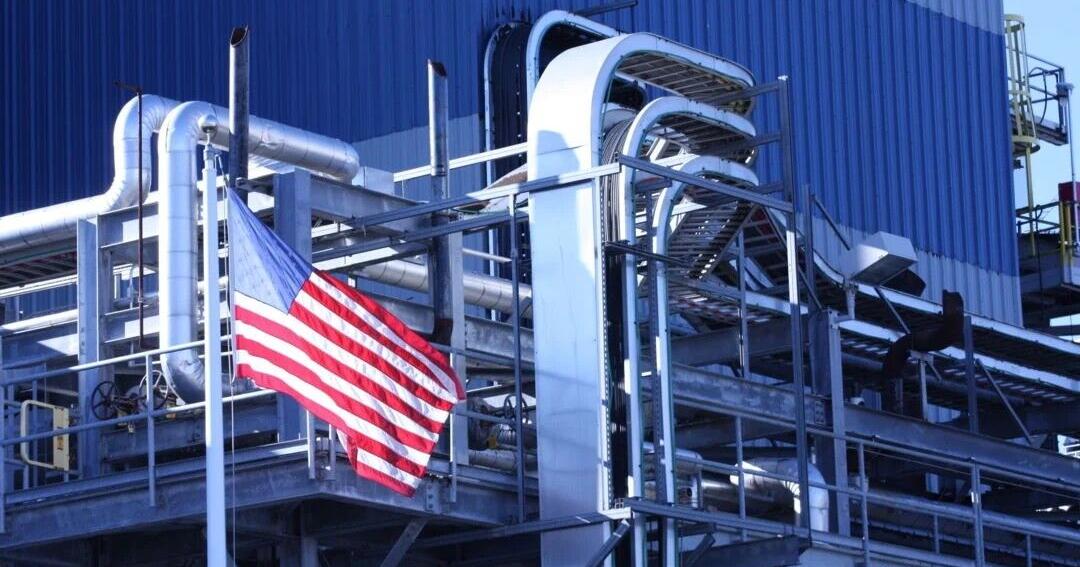
Harry Moser marked America’s 250th the way you would expect from the founder of the Reshoring Initiative: with a scorecard and a to-do list. The numbers show real momentum, with annual reshoring and FDI-related jobs growing from 11,000 in 2010 to roughly 240,000 in 2025, a 25 percent compound annual growth rate, and about half of those jobs landing in small-business supplier networks. Still, the work ahead is significant. U.S. manufacturing costs remain 10 to 20 percent higher than most developed countries and roughly 50 percent higher than China. Moser’s fix starts with skilled labor and total-cost-of-ownership sourcing, which he estimates could bring back up to one million manufacturing jobs without new government spending. With more coordinated industrial policy, his projection is even larger: double the reshoring rate, grow U.S. manufacturing output roughly 40 percent by 2040, and potentially erase the $1.2 trillion goods trade deficit.
Redefining “Made in America”

For decades, the offshoring equation was built around cost. In the Observer, Arin Schultz argues that the shocks of the past few years have added new factors to that calculation, and in many cases, changed the answer altogether. Companies that once optimized almost entirely around unit price are now weighing tariff swings, longer lead times, defect rates, and supply chain risk, which is why domestic production is starting to win in categories it used to lose. As Schultz puts it, “predictability itself becomes a competitive advantage.” He is also clear about the limits of this shift. Domestic capacity is still thin, many components still have no U.S. source at any price, and the skilled trades hollowed out over decades cannot be rebuilt overnight. His sharpest point is for marketers, since consumers have learned to spot an opportunistic flag, and the brands that win this moment will be the ones that can prove where and how their products are made. The demand signal has arrived, but the capacity is still catching up.
Two hundred and fifty years is a long stretch of history, but the lesson has not changed much. From Springfield in 1777 to Spartanburg in 2026, every generation eventually runs into the same truth. If a country wants control over its future, it has to know how to build. The encouraging part is that the lesson seems to be landing again. The harder part is that rebuilding takes longer than celebrating. Factories, suppliers, and skilled workers do not come back overnight.
That is the work ahead. See you in two weeks.
— The Dirac Team