
Howdy,
Reporting to you live from Colorado at the 3D Collaboration & Interoperability Congress (3DCIC).
The rooms here are filled with engineers, OEM leaders, standards experts, and software architects discussing model-based definition and model-based enterprise. Aerospace primes, automotive manufacturers, and defense suppliers are aligned on a simple reality: the 3D model is no longer a drawing replacement. It is the single source of engineering authority.
When the model becomes authoritative, ambiguity drops. When ambiguity drops, downstream systems stabilize. Productivity improves.
That conversation connects directly to this week’s broader signals — from MIT’s analysis of the U.S. productivity paradox to AI adoption in maintenance environments.
Model clarity determines operational performance.
Assembly of the Week
Gear-Box 90 Degree Right Angle Bevel, 1:1 Single Output Shaft

This week’s assembly instructions is powered by BuildOS.
Rate this CAD Model in BuildOS
If you have a favorite CAD assembly you’d like us to feature, reply to this email. We love seeing what people are building.
Industry Signals
1. MIT Sloan: Solving the U.S. Productivity Paradox

The United States continues to generate world-class innovation, yet productivity growth remains constrained. The friction resides between design and execution: in fragmented planning systems, manual change propagation, and informal process control. Productivity compounds when engineering intent remains intact through production.
2. Onshape: Introducing Model-Based Definition (MBD)
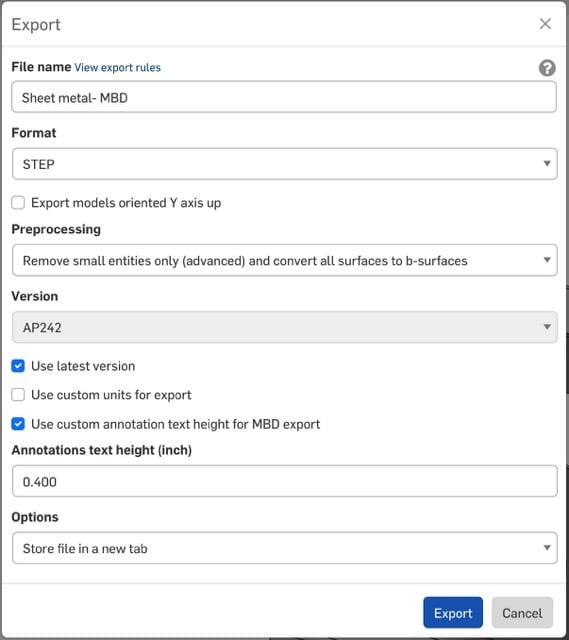
Assembly and constraint updates signal ongoing investment in model determinism. As CAD environments become more stable and machine-readable, the downstream expectation shifts. Production systems must consume the model as structured data, not reinterpret it as instructions.
3. AI in Manufacturing Maintenance

AI deployments in maintenance show measurable gains when scoped to specific assets and tied to defined ROI metrics. Adoption slows when initiatives lack operational boundaries. Industrial returns still favor disciplined implementation over generalized investment themes.
Across conference discussions in Colorado and this week’s industry coverage, the throughline is consistent.
Engineering has matured into a model-based discipline.
Production performance now depends on whether that model governs execution — or merely describes it.
The gap between those two states defines the productivity curve ahead.
Thanks for reading this issue of The Model-Based Manufacturer.
See you in two weeks.
— The Dirac Team