
Manufacturing is scaling again, and quickly. Hiring is accelerating, new technologies are reshaping the factory floor, and companies are investing heavily in data and AI. But as complexity increases, so does the strain on production systems. Training takes longer. Data becomes harder to trust. Ramp-ups expose operational gaps. The common thread is clear: without structured systems, scale introduces friction.
Assembly of the Week
XY Linear Stage Module

This week’s assembly instructions powered by BuildOS is an XY Linear Stage Module!
Rate this CAD Model in BuildOS
Industry News
Workforce Training Investment Surges
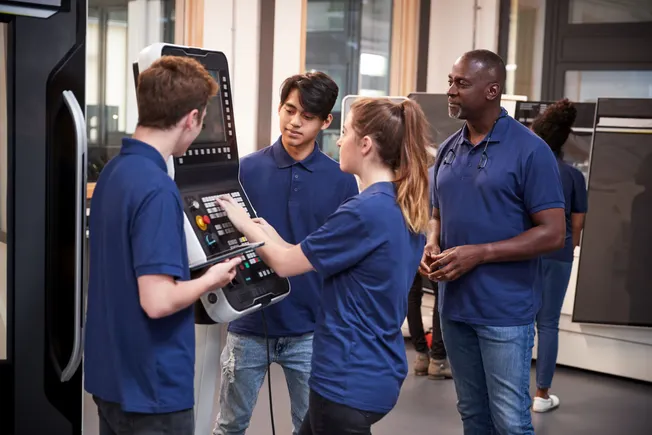
Manufacturers are investing billions into workforce training as factory roles become more technically demanding. New tools and processes require operators to interpret complex systems, not just execute tasks. The education gap is widening alongside technological advancement.
The Manufacturing Data Paradox

Despite heavy investment in data and AI, most manufacturers struggle with disconnected systems, unreliable inputs, and poor traceability. More data alone does not improve decisions. Value depends on whether data is structured, connected, and operationally usable.
Boeing’s Hiring Surge

Manufacturers ramping production are hiring at unprecedented rates, with Boeing bringing on 100–140 workers per week. Rapid workforce expansion increases pressure on onboarding, training, and standardization. This is especially true in complex production environments.
Factories are becoming more advanced, more data-driven, and more dependent on skilled labor.
At the same time, they are being asked to scale faster than ever.
The advantage will go to manufacturers who can onboard talent quickly, trust their data, and maintain alignment across increasingly complex systems.
Scale relies not only on hiring capacity, but also on the systems that enable people, data, and processes to operate in sync.
— The Dirac Team